
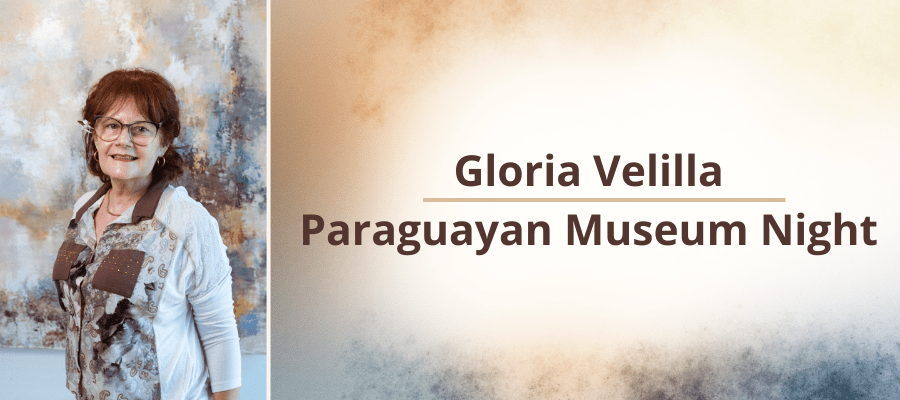
Gloria Velilla is a teacher, cultural manager, and visual artist. She holds a degree in Visual Arts from the Instituto Superior de Arte (ISA) and the Faculty of Architecture (FADA/UNA), and a Master’s degree in Restoration and Conservation of Architectural and Monumental Assets from the same institution in partnership with the Istituto Internazionale di Formazione of Reggio Calabria (Italy).
She is currently Project Director of the Asociación Noche de los Museos (Night of Museums Association) (Asunción, Paraguay) and President of AICA Paraguay (2025–2027). She is a member of the Association of Museologists and Museum Workers of Paraguay (AMUS) and the International Council of Museums (ICOM Paraguay). Since 2007, she has exhibited her work in collective and solo exhibitions.
Gloria Velilla, if you had to describe what Museum Night is like for someone who hasn’t yet been able to enjoy the event, how would you do it?
Look… the association proposes Museum Night as a unique experience, a celebration conceived and designed for citizens to enjoy learning about the heritage held by museums and other similar institutions.
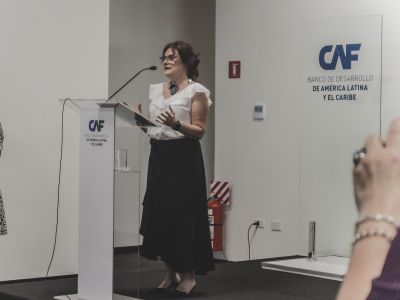
An annual event with nine editions is a huge amount and not so common in Paraguay. What elements does Museum Night now include that you couldn’t afford at the beginning?
The beauty of it is the number of museums and visitors participating today. That, of course, was something we couldn’t afford at the beginning, and we hardly dared to dream of the enormous reach it has achieved over the years. We had no idea it would reach these proportions.
Today, Noche de Museos (Night of Museums) has more participating spaces, interdisciplinary propositions and partnerships with public and private institutions. Each edition grows: new places to visit, a greater diversity of activities, and a citizenry increasingly committed to its heritage… And, most importantly for us, more and more people—groups of friends, families, and young people—enjoying the event.
What inspired or pushed you to start this project called Noche de Museos, and what exactly is your role?
The spark was lit by Rosmary Barrail while we were working on a visual arts exhibition together. Sofía Hepner later joined the project. Thus began the idea of reviving Museum Night in Asunción, adapting an international experience with the hope of reconnecting museums with their audiences.
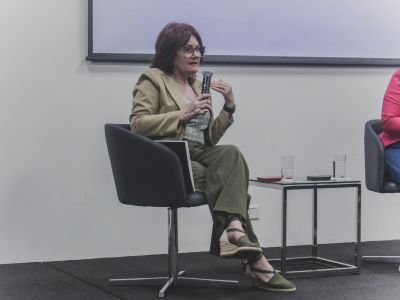
Today it’s a national event, but the first edition was exclusively held in Asunción. Although the activity has been transformed through the years, my role has essentially always been the same: turning the idea into action and keeping it, evolving year after year. Currently, as project manager, I coordinate teams, manage partnerships, and develop strategies to strengthen the relationship between cultural institutions and the visitors.
What role do museums play in today’s hyperconnected society?
Museums allow us to pause, observe, and think. In a fast-paced society, they remain essential spaces for encounter, memory, and dialogue. They reconnect us with what is essential: our history and our identity. Museums are not repositories of valuable objects, as is sometimes thought: If they hold objects, it is because they are the visible signs of a nation’s identity. They help society to be more cohesive and to keep its cultural values.
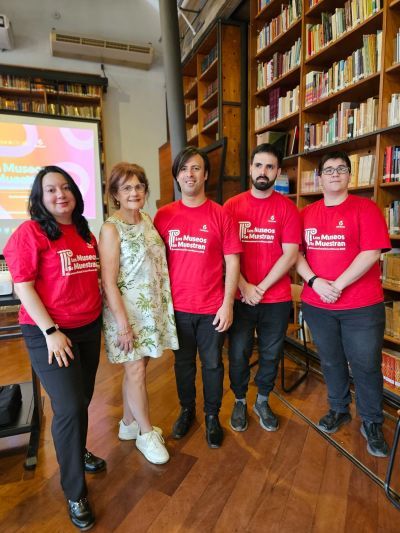
What legacy do you want to leave with Noche de Museos in Paraguay?
I want Noche de Museos to consolidate itself as a sustainable cultural platform, capable of coordinating institutions, communities, and citizens. A project that promotes democratic access to culture and positions museums as development axis and cultural tourism
I would like museums to be perceived by citizens as entities that safeguard, value, and publicize the heritage that makes us Paraguayans who we are, as a society and as a nation.
How does a museum sustain itself the rest of the year, when there are no meaningful events that engage the entire community? What could we, as ordinary citizens, do to improve this situation?
With creativity, hard work, and commitment. Museums need our daily support: visiting them, sharing their activities, donating time, or promoting their work. Cultural heritage belongs to everyone, and its sustainability also depends on citizen participation. I believe Museum Night has contributed to strengthening the connection between citizens and museums, but there is still a long way to go.
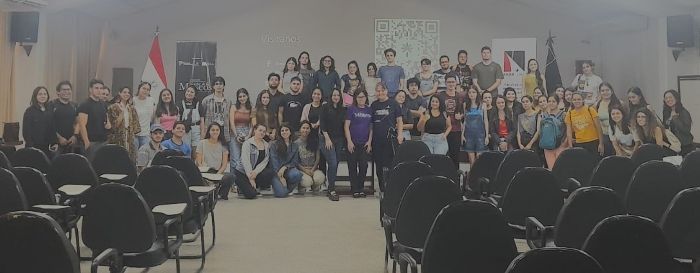
Which museums are in the top 10 most visited that night?
Every year there’s a museum that stands out, but I’ll list 10 in no particular order.
1. National Museum of Fine Arts
3. Central Railway Station Museum
4. Clay Museum
5. Ramón Elías Mythological Museum
6. Andrés Barbero Ethnographic Museum
10. Manzana de la Rivera Cultural Center
What do you recommend for new participants this year to make the most of the evening?
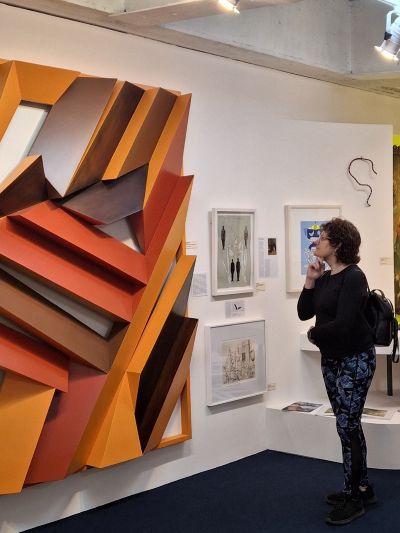
Plan your trip, because you definitely won’t be able to see them all. Use social media to see the participating museums and decide. There are also route maps so you can enjoy the free transportation and let us surprise you. Each museum has a different story: the secret is to explore them slowly and with curiosity…
We’re going to continue here next year, and you’ll be able to take a different route. In fact, I think one of the big draws is that visitors never have enough time to see everything… That way, they can visit another museum on any given day because they were left wanting more and, of course, wait for the next edition of Museum Night to discover more new places.
Gloria Velilla on the couch:
The secret to creating lasting cultural events:
Without a doubt, collaborative work, consistency over time, and a vision that combines management and artistic sensitivity.
A quote about culture from a famous intellectual:
“Culture is not inherited, it is conquered.” A quote coined by André Malraux that I find inspiring, because culture conquers and is conquered day by day.
A cultural figure who has influenced you and why:
Ticio Escobar, for his critical perspective on culture as a right and his commitment to Paraguay’s cultural diversity.