
The other day I was having a very interesting discussion in an expat WhatsApp group where there’s people from many different nationalities. Some people stated that Asunción city centre looks ugly, which is an affirmation I don’t agree at all with.
Someone asked me if I could explain my point of view and say how can information can help prevent the demolition of Paraguayan heritage and its restoration. Here is the answer I gave him:
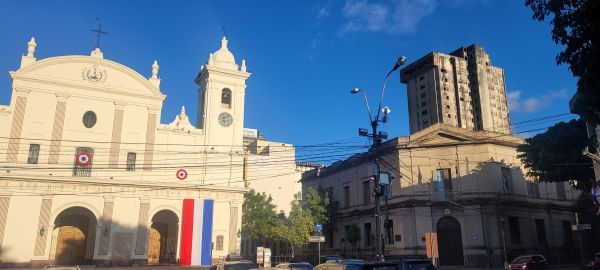
There were two wars in Paraguay in a very short period of time. The Triple Alianza War (it ended in 1870) and Chaco War (1932-1935). During the first one, Asunción city centre was highly damaged. There was no much time to restore buildings between the two wars for more urgent reasons.
As in any other war, heritage was not treated gently.
Before the TAW, Carlos Antonio López, one of the presidents that Paraguay had, wanted to transform Asunción in a city similar to the Europeans. For that reason, he sent a lot of Paraguayans to study in Europe but he also received qualified workforce from England, Italy and France.
During that period were built many of the buildings that you can still see today: the Panteón, the Opera Theatre, The López Palace and others…but apart from those, there were many rich families that had built their palaces in Asunción city centre. If you walk around it you will be able to see all those architectures with different styles: neoclassical, baroque, renaissance, etc.
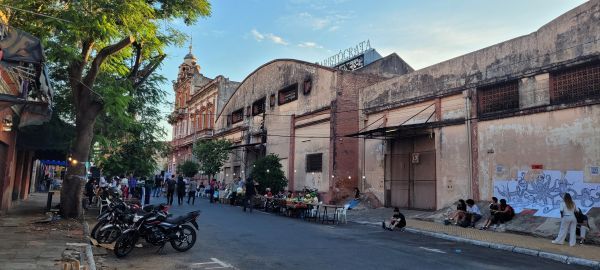
Until 1870, the city’s confines were from calle Brasil to calle Colón, which means that Shopping del Sol area or Mariscal Shopping were considered the countryside. In those areas there were only casas quintas (vilas) such as the Madame Lynch house, Villa Aurelia or the house of Doctor Morra.
What it’s currently considered Asunción city centre was, actually, the whole of Asunción until the sixties or seventies. So, if you ask anyone born around 1950 in Asunción they will tell you they lived in the CENTRO. Their houses were not necessarily rich, but they had an entrance, a big corridor, some rooms and a patio (not a garden but a tiled patio) marking a period of time and a way of living.
Younger generations, decided to move away from the centro. New districts were born, such as Recoleta. However, Asunción city centre was still the place to do shopping. In 1978, the first shopping center appeared: Shopping Villa Morra, and then, after it, some others followed Shopping Mariscal López (1996) and Del Sol (1995), slowly changing the way people lived and consumed.
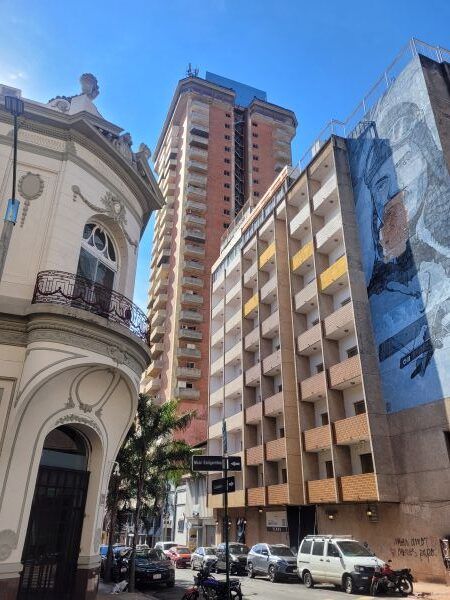
Between 1954 and 1989 there was the dictatorship of Alfredo Stroessner, which was a time of demolitions of historical buildings that have changed the shape and the character of the city. But also the time when all those tall and empty buildings that you can see nowadays in the city centre started to change the skyline of Asunción. There was no plan and no control of the height of them, which has affected the original way Asunción looked.
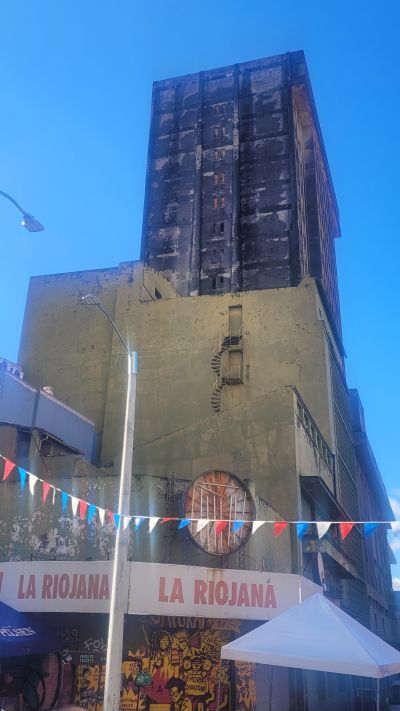
Apart from that, in the 90s there was a financial crisis that ended up with many of the businesses of the centre of the city.
Many new buildings have been built in the Aviadores del Chaco and Santa Teresa area (around the Shopping del Sol) but still big mistakes have been made as it is an area made for thousands of people but still with narrow streets and no sewage system, which creates havoc and bad smells when it rains a lot. Same with trees….Not many projected . All the buildings of the area are made in what today we consider beautiful, but will see how do they resist the passage of time.
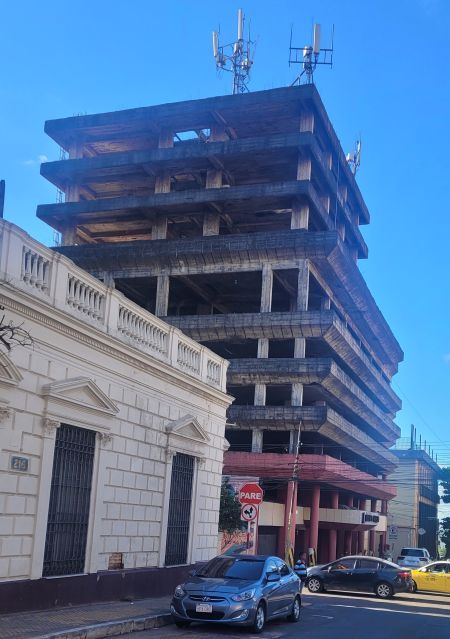
From 2015 approximately there have been initiatives to bring back to life the centro. However, the main problem is that heritage is considered expensive to be restored. Plus taxes are higher in this part of the city. However, all these initiatives were killed by the pandemic. Now again people (AMCHA or the First Lady office) are trying to make the centro lively again, that’s why you shouldn’t be so unfair with it with the comments I mentioned previously.
In fact, there are loads of cultural activities that you can do in the historical city centre of Asunción. You can check them out here.
How can we bring back to life Asunción Historical Centre
In my opinion, we can all do something to bring back to life Asunción city centre:
- You can stop saying it’s ugly and deter people from going there by saying that there are only chespiritos in the area. There are chespiritos, but not more than in Barcelona, Brussels or Paris.
- You can go to the centro and try to see all the heritage and try to understand the city and its history. The fact that there are ugly buildings doesn’t mean that all the rest is ugly.
- You can actually do many nice things in the centre: calle palma y Estrella are nice, all the Cabildo area, Palacio area, the city museum at Manzana de la Rivera, Puerto de Asunción has the best sunsets of the city, Escalinata de Antequera, Museo de Arte Sacro, La Recova, las 4 plazas… and many cafés, hotels and restaurants. To only consider the Shopping del Sol area is, in my opinion, a very limited view.
To me, Asunción city centre is the best part of the city because it’s were the story of this country begins, but I understand also that some people don’t agree with me. It’s a matter of choice, but don’t just say it’s ugly, because it’s not.