
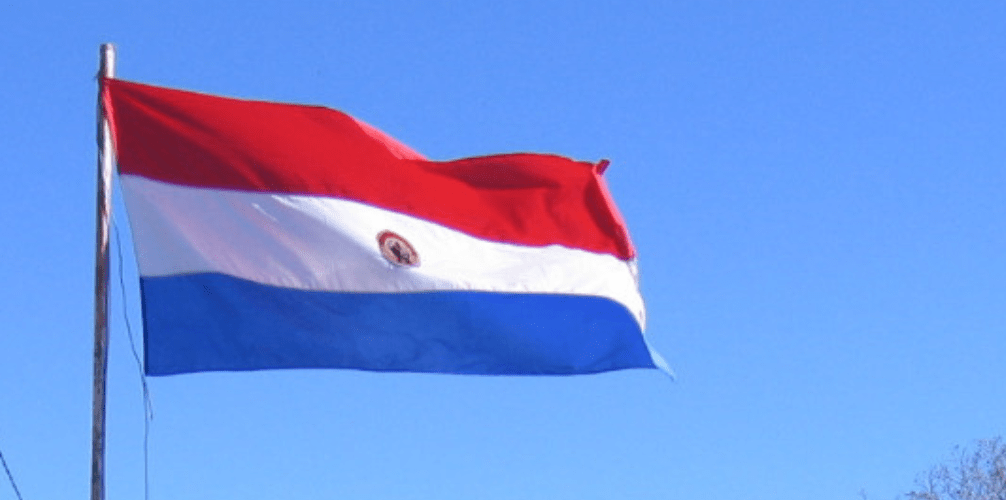
In Paraguay, in addition to Spanish, there is Guaraní, the indigenous language of the Guaraní native that has survived to this day.
Paraguayans are proud of their language for being much more expressive than other languages such as Spanish, English, or French. According to what they say, many of the words that enrich this language have complex meanings that can only be explained in long sentences.
For example, when someone explains to me what a word means, they almost always have to use an entire sentence to explain the whole idea, since it is complex and full of subtleties.
Guaraní pride
Paraguayans’ eyes spark up when they explain what this or that means in guaraní. This is due to the sense of belonging that it inspires them as inhabitants of this territory.
Through Guaraní, Paraguayans identify each other in Paraguay and abroad. This people is not only rich, culturally speaking, but also unique and unrepeatable.
Only the people from Corrientes, Formosa, some Brazilians from the south, and some Misiones and Chaco residents from Argentina, touched by their proximity, have some similarities.
The first time I arrived here, I was surprised not only by the terms that naturally intermingle with Spanish (known as jopará), but also by the names of some towns.
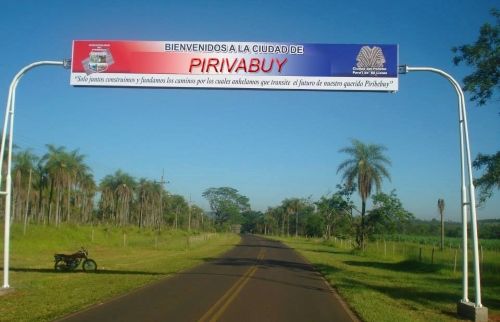
Everything sounded very strange to me: Pirevai, Karuvai, Piribebuy, Paraguarí, resulting in me saying at family meals that I had visited a charming town named Piriguarí or Pirivabuy… A tremendous mess! ^^
Another time I was surprised was when I spent an afternoon with a Spanish acquaintance who had been in Paraguay for two or three years and who had never heard the most repeated expression of Paraguay.
This word starts by “ndera”… and I leave it to you to discover how it ends. 😉In fact, this happened a long time ago, but it’s where today’s article was born—without me realizing it.
Dear foreigners,
I inform you that, if you have lived here for a long time, but you haven’t heard of the following list of words in your life, you haven’t really been to Paraguay.
The 11 exceptional Guarani words that you shouldn’t miss
Kaigue: Pronounced “kaiwe” and it means you’re feeling low of energy and don’t feel like doing anything. The best thing about this word is that it can be used to compose other derivatives.
Just this weekend, someone used the word kaigue to form a neologism: kaiguetism(o). It sounded similar to rheumatism, traumatism or astigmatism and I founded that hilarious. It’s like the Anglo-Saxon way, the make up new verbs from nouns. Like “text” (a text message): I will text you later…^^
Example of how to use the word: I’m kaigue to go out today.
Ka’ure: read all together and with the tonic syllable on the u. It means “very drunk.” Don’t be surprised to hear Paraguayans using the term on a Sunday afternoon, explaining an anecdote from the previous night.
Best of all, Paraguayans are the only people on earth who take a drug called “Yeron,” which they say helps with hangovers. Talking about new verbs, they have created another one: “yerar,” which is the time it takes for the hangover to go away. Conclusion: the English are not only the ones to create new words.
Tekorei: Pronounced with the tonic syllable on the final i, but it’s not accented because it’s oxytone (one of the rules of Guaraní, although someone told me this… I need to start studying).
It means to be unwilling to do anything useful. This is my favorite word in the Guaraní language, especially because of how Paraguayans emphasize it. I mean, you don’t say “I’m tekorei,” you say “I’m tekkoreíí”… so that the “k” and the “i” are clearly emphasized. Like that, your listeners will understand that you are in quite a state. I love it!
I almost forgot! One can also “be a tekorei” or “be a great May Day” (workers’ day). In other words, lazy. Amazing!
Ñandejára: it means “God!” It’s pronounced “gnandeiara”. Don’t try to understand why “ñande” is “my” and “jára”, “owner”, but “Ñandejára”, together, only means god.
It’s used both in cases of surprise and in cases of disappointment. For example, when someone tells you about a terrible accident, you can say “Ñandejára” as if you’re horrified by what they’re telling you.
Or, when you’ve explained the same thing to someone three times and they still don’t understand, you exclaim “Ñandejara” because you’ve run out of patience.
Pirevai: This word is oxytone, so it’s pronounced with the tonic syllable on the final í, as it is on the next word. It means to be in a bad mood, but it’s not only used as if it were a temporary state. Example: “I’m pirevai,”.
It’s also used to describe someone’s bad temper, for example, it’s possible to BE a pirevai. And I can attest that because I know several…but I’m not going to give names…^^
Karuvai: It literally means “to eat ugly” (poorly) and refers to both people who eat large amounts of food and those who eat recklessly, that is, those who mix chocolate with hot dogs and act as if nothing had happened.
It’s also used to describe a man or woman who sleeps with someone very ugly. It’s incredible how a language can have just one word to express that idea! Let’s continue with our 11 unique words in Guaraní.
Ndéra: Don’t forget to pronounce the “n” of the beginning. Don’t miss it otherwise it won’t sound good. It’s used as a complaint, to express annoyance or surprise. It’s the equivalent of “wow!” or “fuck”.
You already know that the longer the word used to vent, the better one feels. For that same reason, depending on the level of annoyance of the person speaking, you’ll find some who just say “ndera” and others who are more annoyed they end the word with a “core,”. Using both in one word is the maximum level of anger in Paraguay.
This word has its politically correct version, which is also the way children use it. Yes, children use it.
That is “nderasore” or “nderachore”, which is just a euphemism to make it sound less harsh. Since Paraguayans are creative, there’s no shortage of people who just use the final part of the word, letting out a loud “core!,”. This is like using “ndera” but a little stroger…or those who say only “chore,” which is just the final part of the mentioned euphemism. I think I need to create an infographic. It’s far too complicated! ^^
So, it’s gibberish, but to clarify a little, you can use ndera, nderasore, nderachore, or chore even in a work environment. And I think we can all agree that you can use “nderacore” when driving.
Nambré: According to experts, it’s not Guaraní, but a Paraguayanism. It’s equivalent to “leave me alone!” or “I’m fed up!” (give me a break!), but it’s also used when making a list and you want to point out a long etcetera.
In those moments, instead of using the common etcetera, you use nambré, which means that the speaker doesn’t want to continue listing because there are already too many elements to mention.
You can also use “nambré” when something is the best and, if you add the word “luego” (later/in fact) after it, then it means that it was the best. In a future article I will talk about the curious way how Paraguaians use “luego”.
Example of “nambré luego”: El casamiento fue increíble: hubo varios grupos de música, comida deliciosa, “nambré luego”! 🙂 I don’t know if that helps. It took me a while to understand it!
Vyrorei: Literally means: silly thing. Figuratively means a waste of time doing something not important. When you use the expression “vive del vyroreí” (live off vyrorei), it refers to spending your days doing things that aren’t productive.
It’s also pronounced as an oxytone, meaning it has the tonic vowel on the í. If you’re a foreigner, don’t try to pronounce this word or any with the letter “y” in front of a local audience, or you’ll end up in a kind of phonetics class mixed with general mockery that will be hard to escape
Varea: It’s literally hunger, and it’s pronounced vareá. When someone is starving in Paraguay, they’ll never tell you in Spanish. Why? Because vareá is the highest level of hunger one can reach 🙂
Na: It’s a super-common particle used instead of please. Placing it next to a verb helps Paraguayans soften their words so they don’t sound too direct or demanding. So, you’ll hear a lot of “pasámena” (pass me please), “venína (come please),” “damena (give me please),” or “nambrena,” which deserves a whole new chapter. Here we go:
Going back to the word “nambré,” which I mentioned earlier, there’s also nambrena, which is used when a child is so lovely that you can’t help saying it. You can also use it when you feel sorry for someone or when you’re mentioning that endless list of things we were talking about previously. When this is the case, nambrena would be equivalent to nambre luego and refers to the fact that the list is very long or the thing they are talking about really good. Understood? ^^
If you’re new to Paraguay and you’ve understood all this, you deserve a reward, because it took me years to fully grasp it all! Come on, you can do it! Let’s enjoy the uniqueness of Paraguay and its guaraní language. 😉
My name is Rosa Grimaldi, founder of La Fábrica de las Palabras, cultural content creation and of How to Love Paraguay, the definite cultural agenda for locals and foreigners.
I arrived in Paraguay for the first time in 2008 and came to live in this country in 2013. It took me four years to understand you, and now that I’ve done so, I thought it might be useful to others like me.
If you enjoyed my article and want others to soak up the richness of Paraguay, please share it with your friends.
This article is the property of Rosa Grimaldi. Originally published on www.lafabricadelaspalabras.com in 2017 and republished in 2025 on the new website How to Love Paraguay. Don’t copy, just spread the word.
this was super cool and helpful. thank you so much!
Thanks Noe! I hope you come back for more 🙂